








COMS W4995 Applied Machine Learning - Spring 19
COMS W4995 Applied Machine Learning - Spring 18
COMS W4995 Applied Machine Learning - Spring 20
amueller/advanced_training 109
Advanced Scikit-learn training session
amueller/applied_ml_spring_2017 84
Website and material for the FIXME course on Practical Machine Learning
amueller/aml 55
Applied Machine Learning with Python
Data Analysis Baseline Library
amueller/advanced_git_nyu_2016 41
Advanced git and github course material
amueller/advanced-sklearn-boston-nlp-2016 18
Material and slides for Boston NLP meetup May 23rd 2016
issue closeddabl/dabl
Error 'TypeError: 'function' object is not iterable' in function 'plot'
Hello,
for allmost all functions of the package 'dabl' (such as 'clean' and 'plot' for example) I keep getting the following error:
TypeError: 'function' object is not iterable
This does not seem to be a problem of my specific data, because when I run the following example code (from the website):
import matplotlib.pyplot as plt
from sklearn.datasets import load_wine
from dabl import plot
from dabl.utils import data_df_from_bunch

wine_bunch = load_wine()
wine_df = data_df_from_bunch(wine_bunch)

plot(wine_df, 'target')
I then get the following output on my machine:
  File "<ipython-input-61-92b3b7736897>", line 1, in <module>
    plot(wine_df, 'target')

  File "C:\Daten\Anaconda3\lib\site-packages\dabl\plot\supervised.py", line 485, in plot
    X, types = clean(X, type_hints=type_hints, return_types=True)

  File "C:\Daten\Anaconda3\lib\site-packages\dabl\preprocessing.py", line 380, in clean
    lambda x: str(x))

  File "C:\Daten\Anaconda3\lib\site-packages\pandas\core\accessor.py", line 115, in f
    return self._delegate_method(name, *args, **kwargs)

  File "C:\Daten\Anaconda3\lib\site-packages\pandas\core\categorical.py", line 2204, in _delegate_method
    res = method(*args, **kwargs)

  File "C:\Daten\Anaconda3\lib\site-packages\pandas\core\categorical.py", line 940, in rename_categories
    cat.categories = new_categories

  File "C:\Daten\Anaconda3\lib\site-packages\pandas\core\categorical.py", line 408, in categories
    new_dtype = CategoricalDtype(categories, ordered=self.ordered)

  File "C:\Daten\Anaconda3\lib\site-packages\pandas\core\dtypes\dtypes.py", line 154, in __init__
    self._finalize(categories, ordered, fastpath=False)

  File "C:\Daten\Anaconda3\lib\site-packages\pandas\core\dtypes\dtypes.py", line 181, in _finalize
    fastpath=fastpath)

  File "C:\Daten\Anaconda3\lib\site-packages\pandas\core\dtypes\dtypes.py", line 319, in _validate_categories
    categories = Index(categories, tupleize_cols=False)

  File "C:\Daten\Anaconda3\lib\site-packages\pandas\core\indexes\base.py", line 374, in __new__
    subarr = _asarray_tuplesafe(data, dtype=object)

  File "C:\Daten\Anaconda3\lib\site-packages\pandas\core\common.py", line 379, in _asarray_tuplesafe
    values = list(values)

TypeError: 'function' object is not iterable
However, when I installed dabl it did not complain (it said: 'Successfully built dabl'). Is this a bug? Is there maybe an obvious workaround so that I can still use the package?
Thank you for your time
Hannes
closed time in 19 hours
chanes76
issue commentdabl/dabl
Error 'TypeError: 'function' object is not iterable' in function 'plot'
closing as no reply.
comment created time in 19 hours
push eventdabl/dabl.github.io
commit sha 62bb7d3bc9abbf184a8edc492b0d6ca561d5e18a
Pushing the docs to dev/ for branch: master, commit 9a780fd9c49a8538f7e50dd6a548344bde644bbb
push time in 19 hours
issue closeddabl/dabl
drop outliers in regression target for plotting
Nice example of the plotting having issues with outliers is
topo_2_1
closed time in 19 hours
amueller
issue commentdabl/dabl
drop outliers in regression target for plotting
Fixed in #233, thanks @SvoONs !
comment created time in 19 hours
push eventdabl/dabl
commit sha 9a780fd9c49a8538f7e50dd6a548344bde644bbb
bump master to 0.2.0-dev (#264) * prepare for 0.1.10 release * fix regex for deploy of docs (#260) * fix regex for deploy of docs * add sphinx_issues to doc build * Fix doc push path (#262) * fix regex for deploy of docs * add sphinx_issues to doc build * push to correct path * try to fix doc folder name * actually next version is 0.1.9 lol * bump master to 0.2.0-dev
push time in 19 hours
PR merged dabl/dabl
pr closed time in 19 hours
PR opened dabl/dabl
pr created time in 21 hours
push eventdabl/dabl.github.io
commit sha be5e178344e18e61a19575f8f17abce6b0d5dff0
fix version to 0.1.9
push time in 21 hours
push eventdabl/dabl.github.io
commit sha ce7b62644bce49972f5ca0937dd4e771cf7b10b1
Pushing the docs to 0.1.9/ for branch: 0.1.9, commit 95c1c1cb5d16d4b083c548fa2d3aa0328e873493
push time in 21 hours
issue closeddabl/dabl
Render stable documentation for release
We should add a stable documentation rendering that uses the latest release and make that the default website.
closed time in 21 hours
amueller
issue commentdabl/dabl
Render stable documentation for release
done in #263 and related.
comment created time in 21 hours
push eventdabl/dabl.github.io
commit sha 69827269ee4320bf64404abac5939d4b78f65c3d
delete badly named folder, make default url reroute to sable
push time in 21 hours
push eventdabl/dabl.github.io
commit sha bdc259452df557d8d0b5452b185f8dc1b7bd1c25
Pushing the docs to 0.1.10/ for branch: 0.1.10, commit e6b97babf6047320163b55412d6186959e5509a6
push time in 21 hours
push eventdabl/dabl
commit sha e6b97babf6047320163b55412d6186959e5509a6
try to fix doc folder name (#263)
push time in 21 hours
push eventamueller/dabl
commit sha 0f1b415755bca0a0956c9f1441160eea52a80a10
gah
push time in 21 hours
push eventdabl/dabl
commit sha 3e5ba0e51022576c91817a39d2d84e5340dd3e13
Fix doc push path (#262) * fix regex for deploy of docs * add sphinx_issues to doc build * push to correct path
push time in a day
push eventdabl/dabl.github.io
commit sha 26cf9b8bb25797abbb31a32bf63190afab6ba465
Pushing the docs to 0.1./ for branch: 0.1.10, commit 556f72a5922ce16193d4ea673bef6a011313d9c8
push time in a day
push eventdabl/dabl
commit sha 556f72a5922ce16193d4ea673bef6a011313d9c8
fix regex for deploy of docs (#260) * fix regex for deploy of docs * add sphinx_issues to doc build
push time in a day
PR merged dabl/dabl
pr closed time in a day
push eventdabl/dabl.github.io
commit sha a9e7759be0eecf38e07166acf7c68bd2056b3983
Pushing the docs to dev/ for branch: master, commit a5cd0e9dab28cfb0e30c973e7723920f22979f23
push time in a day
push eventdabl/dabl
commit sha a5cd0e9dab28cfb0e30c973e7723920f22979f23
Drop outliers in target column in plot_regression_continuous (#233)
push time in a day
PR merged dabl/dabl
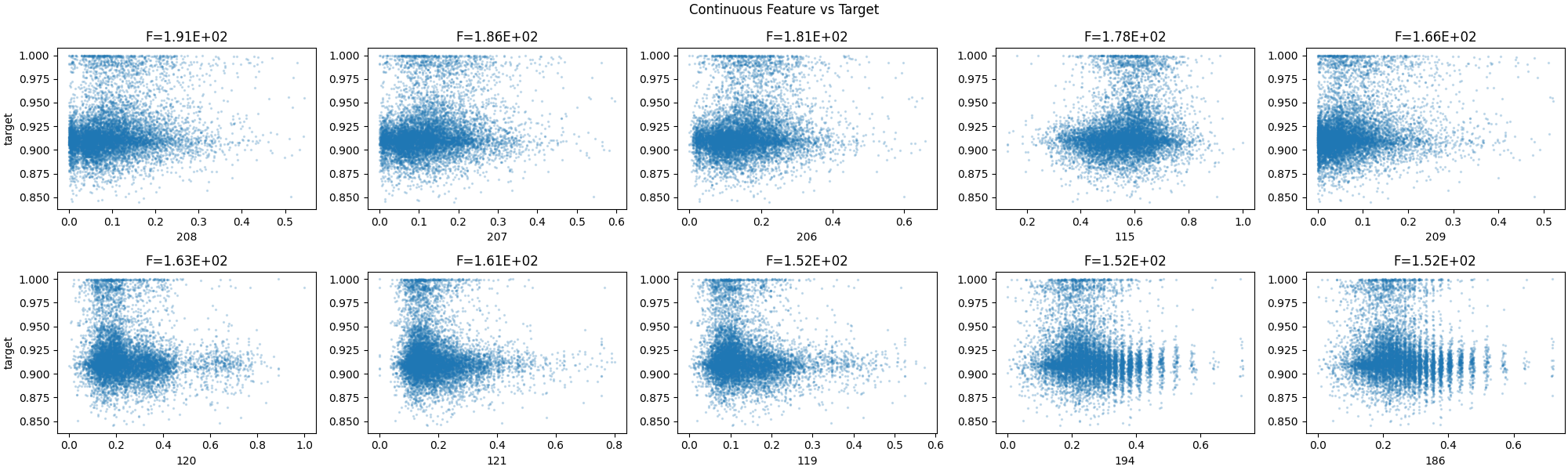
This pull request adds a step to drop outliers in the target column for regression plots in order to improve the usability of such plots in case of outliers in the target column. This is done by simply calling _find_inliers on the target column as it is already done per default for features.
The plot for the dataset topo_2_1 mentioned in #214 with the menioned fix looks the following:

pr closed time in a day
pull request commentdabl/dabl
Drop outliers in target column in plot_regression_continuous
Thanks, this looks good. Sorry for the slow reply!
comment created time in a day
issue openeddabl/dabl
really long axes names are cut off, even if there's space
If you have a really long xlabel, it will be cut off at a fixed point, independent of how large the axis actually is.
created time in a day
push eventamueller/dabl
commit sha 50f1e9b6e75f563e8b581a67b6c1762c18364507
add sphinx_issues to doc build
push time in a day
PR opened dabl/dabl
pr created time in a day
push eventamueller/dabl
commit sha cc35a6372f2850b21268531d4be2c718bb2e2190
fix regex for deploy of docs
push time in a day
pull request commentmicrosoft/MLOS
Make Mlos.Server.Agent use CommandLineParser for configurable endpoints
Is there a reasonably simple way to test this?

comment created time in a day
push eventdabl/dabl.github.io
commit sha 59c02673b86b3fdbefcafada7de6bccee3f6f5b0
Pushing the docs to dev/ for branch: master, commit bf48fd00199d0fe437ce23e14284c058bf78d865
push time in a day
issue commentdabl/dabl
AnyClassifier preprocessing and OpenML automlbenchmark integration
Can you check if this is fixed in master now? Thanks!

comment created time in a day
push eventdabl/dabl
commit sha bf48fd00199d0fe437ce23e14284c058bf78d865
MRG start using detect types (#256) * start using detect types * restore previous behavior on mixed integers * add test for detecting / preprocessing mix of bool and nan
push time in a day
issue closeddabl/dabl
AnyClassifier preprocessing and OpenML automlbenchmark integration
I have been trying to integrate AnyClassifier as an automl framework to https://github.com/openml/automlbenchmark in order to run experiments in a controlled environment. I feel like I have an OK grasp of the automlbenchmark repo now and have successfully integrated standalone sklearn algorithms as frameworks and ran the test benchmark. While I did find a way to make dabl work as well, automlbenchmark doesn't seem to play well with the dabl preprocessing functions. Here is an example traceback:
Traceback (most recent call last):
  File "/Users/hp2500/Google Drive/STUDY/Columbia/Research/dabl_develop/automlbenchmark/automlbenchmark/amlb/benchmark.py", line 420, in run
    meta_result = framework.run(self._dataset, task_config)
  File "/Users/hp2500/Google Drive/STUDY/Columbia/Research/dabl_develop/automlbenchmark/automlbenchmark/frameworks/dabl/__init__.py", line 4, in run
    return run(*args, **kwargs)
  File "/Users/hp2500/Google Drive/STUDY/Columbia/Research/dabl_develop/automlbenchmark/automlbenchmark/frameworks/dabl/exec.py", line 30, in run
    predictor.fit(X_train, y_train)
  File "/Users/hp2500/Google Drive/STUDY/Columbia/Research/dabl_develop/dabl/dabl/models.py", line 438, in fit
    types = detect_types(X, type_hints=self.type_hints)
  File "/Users/hp2500/Google Drive/STUDY/Columbia/Research/dabl_develop/dabl/dabl/preprocessing.py", line 321, in detect_types
    clean_float_string, dirty_float = _find_string_floats(
  File "/Users/hp2500/Google Drive/STUDY/Columbia/Research/dabl_develop/dabl/dabl/preprocessing.py", line 158, in _find_string_floats
    is_float = X.apply(_float_matching)
  File "/miniconda3/envs/dabl_test/lib/python3.8/site-packages/pandas/core/frame.py", line 6878, in apply
    return op.get_result()
  File "/miniconda3/envs/dabl_test/lib/python3.8/site-packages/pandas/core/apply.py", line 186, in get_result
    return self.apply_standard()
  File "/miniconda3/envs/dabl_test/lib/python3.8/site-packages/pandas/core/apply.py", line 295, in apply_standard
    result = libreduction.compute_reduction(
  File "pandas/_libs/reduction.pyx", line 620, in pandas._libs.reduction.compute_reduction
  File "pandas/_libs/reduction.pyx", line 128, in pandas._libs.reduction.Reducer.get_result
  File "/Users/hp2500/Google Drive/STUDY/Columbia/Research/dabl_develop/dabl/dabl/preprocessing.py", line 20, in _float_matching
    is_floaty = X_col.str.match(_FLOAT_REGEX)
  File "/miniconda3/envs/dabl_test/lib/python3.8/site-packages/pandas/core/generic.py", line 5270, in __getattr__
    return object.__getattribute__(self, name)
  File "/miniconda3/envs/dabl_test/lib/python3.8/site-packages/pandas/core/accessor.py", line 187, in __get__
    accessor_obj = self._accessor(obj)
  File "/miniconda3/envs/dabl_test/lib/python3.8/site-packages/pandas/core/strings.py", line 2041, in __init__
    self._inferred_dtype = self._validate(data)
  File "/miniconda3/envs/dabl_test/lib/python3.8/site-packages/pandas/core/strings.py", line 2098, in _validate
    raise AttributeError("Can only use .str accessor with string values!")
AttributeError: Can only use .str accessor with string values!
My workaround consists of formatting all variables as strings before passing them to AnyClassifier() in the automlbenchmark exec.py file. However, I was surprised by the errors, since I have tested AnyClassifier() on a few datasets outside of automlbenchmark and never had similar issues. I just wanted to flag this in case you think it needs attention. I also thought about the option to add an argument to AnyClassifier(), such that users can indicate whether they want to use it with or without EasyPreprocessor(), as some users might be only interested in the portfolios and not the preprocessing part.
Best, Heinrich
closed time in a day
hp2500
push eventamueller/dabl
commit sha c4290309837ebd8163abf78349d79b99cb395331
more lint
push time in a day
push eventamueller/dabl
commit sha 759b9dbfcce7aace97d335764124dcc69d71cd16
intermediate broken stuff
commit sha 4c4f915d200c612b0971f71bc1907570ffb58f58
undo weird stuff
commit sha 27e5135adfb133ffc9a2d13aad1a617aedd0723d
add test for detecting / preprocessing mix of bool and nan
push time in a day
issue openedscikit-learn/scikit-learn
Error on using None for missing values in SimpleImputer with boolean arrays
from sklearn.impute import SimpleImputer
import pandas as pd
X2 = pd.DataFrame({'a': [True, False, True, False, None]})
SimpleImputer(strategy='most_frequent').fit_transform(X2)
TypeError: '<' not supported between instances of 'NoneType' and 'bool'
Interestingly this works when the remaining types are float, or when using np.NaN for the missing value.
Potentially related to #17625, where I suggested treating None as np.NaN.
FYI X2.a.unique() gives the expected result, np.unique(X2.a) errors. I'm not sure if using the __array_function__ protocol might help us here, we might be casting to numpy arrays before hitting the unique.
created time in a day
issue commentdabl/dabl
AnyClassifier preprocessing and OpenML automlbenchmark integration
Do you know which dataset caused this error? I'm trying to reproduce.
comment created time in a day
issue commentdabl/dabl
Thanks for reporting! Indeed the explain function is not very robust yet.
Scikit-learn makes mapping input to output columns a bit hard, which will hopefully be improved by https://github.com/scikit-learn/scikit-learn/pull/16772
I'll see what I can do in the meantime, dabl also needs some updates for the current version on sklearn, which I'll probably try to make work first.

comment created time in a day
pull request commentmicrosoft/MLOS
added feature imputation to RERF predict()
I'm not entirely sure I understand the issue, but would it be possible to reuse a sklearn ColumnTransformer to preserve the mapping? Or maybe alternatively write an Adaptor that does something similar using the dimension information?

comment created time in a day
push eventamueller/word_cloud
commit sha 5f23ed47727eb97c45883fd34f98cd62a1c8a55b
regex change to address issue #495 (#585) * Update wordcloud.py * Update wordcloud.py changed to reflect the feedback from amueller in https://github.com/amueller/word_cloud/pull/585 * Update test_wordcloud.py default patterns test added re single character word cloud support
push time in a day
PR merged amueller/word_cloud
Changed r"\w[\w']+" to r"\w[\w']*" so that single words are matched too, as per issue #495.
Note: the user will need to be mindful that single letters words such as 'a' and 'i' will not appear if the default stopword list is used.

pr closed time in a day
pull request commentamueller/word_cloud
regex change to address issue #495
great, thank you!
comment created time in a day
Pull request review commentmicrosoft/MLOS
 #
 from mlos.Examples.SmartCache.CacheImplementations.XruCache import XruCache
 from mlos.Spaces import DiscreteDimension, Point, SimpleHypergrid
-from mlos.Spaces.Configs.DefaultConfigMeta import DefaultConfigMeta
+from mlos.Spaces.Configs.ComponentConfigStore import ComponentConfigStore

-class LruCacheConfig(metaclass=DefaultConfigMeta):
-    CONFIG_SPACE = SimpleHypergrid(
+LruCacheConfigStore = ComponentConfigStore(
the Python way would be underscores, I think: https://www.python.org/dev/peps/pep-0008/#global-variable-names But if consistency with C# style is a concern I think CamelCase wouldn't be too disruptive? Usually that's reserved for classes.

comment created time in 2 days
push eventamueller/MLOS
commit sha ec5caaa631268aa153576277480572506d09c81c
debuggggging
push time in 2 days
pull request commentmicrosoft/MLOS
added feature imputation to RERF predict()
If it still tests the thing it was originally designed to test then sure. Otherwise maybe add a separate test with N=1?
comment created time in 2 days
Pull request review commentmicrosoft/MLOS
Document SmartCache C++ example code
+# Troubleshooting Tips++Here are some common tips for troubleshooting various issues.++## Contents++- [Troubleshooting Tips](#troubleshooting-tips)+ - [Contents](#contents)+ - [Editor Integrations](#editor-integrations)+ - [VSCode in WSL](#vscode-in-wsl)+ - ["Missing .Net SDK" message when executing `code .` in WSL](#missing-net-sdk-message-when-executing-code--in-wsl)++## Editor Integrations++### VSCode in WSL++#### "Missing .Net SDK" message when executing `code .` in WSL++The [Omnisharp](https://github.com/OmniSharp/omnisharp-vscode/wiki/Troubleshooting:-'The-.NET-Core-SDK-cannot-be-located.'-errors) plugin for VSCode may have trouble finding the `dotnet` setup locally for the MLOS repo in `tools/`, even if you source the `scripts/init.linux.sh` script to setup your `PATH` environment.++To workaround this issue, you can [install `dotnet` system wide for your WSL2 distro](https://docs.microsoft.com/en-us/dotnet/core/install/linux).++Here are the instructions for Ubuntu 20.04:\+<https://docs.microsoft.com/en-us/dotnet/core/install/linux-ubuntu#2004->
Ok actually works now :)
comment created time in 2 days
Pull request review commentmicrosoft/MLOS
Document SmartCache C++ example code
+# Troubleshooting Tips++Here are some common tips for troubleshooting various issues.++## Contents++- [Troubleshooting Tips](#troubleshooting-tips)+ - [Contents](#contents)+ - [Editor Integrations](#editor-integrations)+ - [VSCode in WSL](#vscode-in-wsl)+ - ["Missing .Net SDK" message when executing `code .` in WSL](#missing-net-sdk-message-when-executing-code--in-wsl)++## Editor Integrations++### VSCode in WSL++#### "Missing .Net SDK" message when executing `code .` in WSL++The [Omnisharp](https://github.com/OmniSharp/omnisharp-vscode/wiki/Troubleshooting:-'The-.NET-Core-SDK-cannot-be-located.'-errors) plugin for VSCode may have trouble finding the `dotnet` setup locally for the MLOS repo in `tools/`, even if you source the `scripts/init.linux.sh` script to setup your `PATH` environment.++To workaround this issue, you can [install `dotnet` system wide for your WSL2 distro](https://docs.microsoft.com/en-us/dotnet/core/install/linux).++Here are the instructions for Ubuntu 20.04:\+<https://docs.microsoft.com/en-us/dotnet/core/install/linux-ubuntu#2004->
Could still not make this work after successfully running these instructions.
comment created time in 2 days
Pull request review commentmicrosoft/MLOS
Document SmartCache C++ example code
main( CyclicalWorkload(2048, smartCache); } + // After having run a workload for a while, we want to check for a new+ // config suggestion from an optimizer.+ // In this case we make it a blocking call.++ // First, create some condition variables to help signal when the new+ // config is ready to be consumed.+ // bool isConfigReady = false; std::mutex waitForConfigMutex; std::condition_variable waitForConfigCondVar; - // Setup a callback.+ // Also, setup a callback lambda function for handling the+ // SharedConfigUpdatedFeedbackeMessage we expect to receive from the+ // agent after we request a config update with a RequestNewConfigurationMessage.+ //+ // Note: this lambda will be invoked by the background task setup above+ // for processing messages on the feedback channel. // ObjectDeserializationCallback::Mlos::Core::SharedConfigUpdatedFeedbackMessage_Callback = [&waitForConfigMutex, &waitForConfigCondVar, &isConfigReady](Proxy::Mlos::Core::SharedConfigUpdatedFeedbackMessage&& msg) {- // Ignore the message.+ // The contents of the message are irrelevant in this case.+ // It's just a signal that the RequestNewConfigurationMessage+ // has been processed by the agent. // UNUSED(msg); + // So, we will just notify the waiting loop (below) that the+ // message has been processed now and is ready to be read.+ // std::unique_lock<std::mutex> lock(waitForConfigMutex); isConfigReady = true; waitForConfigCondVar.notify_all(); }; - // Send a request to obtain a new configuration.+ // Send a request to obtain a new configuration from the optimizer.+ //+ // Note: the message (as defined in+ // SmartCache.SettingsRegistry/CodeGen/SmartCache.cs) has no members, so+ // there's no details to fill in here (and it is just zero-initialized).+ // It's simply a signal to send to the external agent to request a new+ // config be populated in the shared memory region. // SmartCache::RequestNewConfigurationMessage msg = { 0 }; mlosContext.SendTelemetryMessage(msg); + // Now, we wait for the external agent to respond to our request.
If no optimizer is registered then... ? it'll send a message without touching the shared memory?
comment created time in 2 days
Pull request review commentmicrosoft/MLOS
Document SmartCache C++ example code
 public static void Main(string[] args)                 //
                 AppContext.SetSwitch("System.Net.Http.SocketsHttpHandler.Http2UnencryptedSupport", true);

+                // This populates a variable for the various settings registry
+                // callback handlers to use (by means of their individual
+                // AssemblyInitializers) to know how they can connect with the
+                // optimizer.
+                //
+                // See Also: AssemblyInitializer.cs within the SettingsRegistry
+                // assembly project in question.
+                //
                 Uri optimizerAddressUri = new Uri("http://localhost:50051");
                 MlosContext.OptimizerFactory = new MlosOptimizer.BayesianOptimizerFactory(optimizerAddressUri);
             }

-            // Create circular buffer shared memory before running the target process.
+            // Create (or open) the circular buffer shared memory before running the target process.
             //
             MainAgent.InitializeSharedChannel();

-            // Active learning, almost done. In active learning the MlosAgentServer controls the workload against the target component.
+            // Active learning mode.
+            // In active learning the MlosAgentServer controls the workload against the target component.
I don't see how/where the workload is controlled. It just launches an executable, right?
comment created time in 2 days
Pull request review commentmicrosoft/MLOS
Document SmartCache C++ example code
 // for license information.
 // </copyright>
 // -----------------------------------------------------------------------
+//
+// This file contains the data structures that represent both the component
+// settings as well as the component specific messages it can send to and
+// receive from the agent.
+//
+// Note: they are annotated with C# attributes that allow the MLOS code
+// generation process to walk the structures using reflection.
+//
+// The .csproj file for this SettingsRegistry assembly specially declares this
+// file as relevant (SettingsRegistryDef) to for Mlos.SettingsSystem.CodeGen to
+// invoke that process.
+//
+// Then according to those rules the code generation output by default is
+// sent to out/Mlos.CodeGen.out/SmartCache/SettingsProvider_gen_*.*
+//
+// Different settings registries are separated to different folders (and
+// optionally namespaces - see SmartCache/CodeGen/AssemblyInfo.cs) to allow
+// multiple settings registries to be included in the same project.
+//
+// Mlos.SettingsSystem.CodeGen outputs for multiple languages (e.g. C++, C#,
+// etc.)
+//
+// For C++ the codegen are expected to be used with #include statements.
// For C++ the codegen is expected to be used with #include statements.
?
comment created time in 2 days
Pull request review commentmicrosoft/MLOS
Document SmartCache C++ example code
// @File: Main.cpp // // Purpose:-// <description>+// The main entrypoint to the SmartCache example.+//+// It's meant as an end-to-end microbenchmark example for the C++ version of the+// SmartCache Python Notebook example.+//+// It provides different cache replacement policies and cache sizes as tunables+// for an optimizer to tune for different workloads. // // Notes: // <special-instructions> // //********************************************************************* +// Include all the common headers for the application+// (including Mlos.Core and component settings registry code generation output)+// #include "stdafx.h" +// Include platform specific implementations of some Mlos functions.+// Only needed in one compilation unit for a given target.+// #include "MlosPlatform.Std.inl" using namespace Mlos::Core; using namespace SmartCache; -// Include codegen files.-//-#include "GlobalDispatchTable.h"- #include "SmartCacheImpl.h" #include "Workloads.h" +// A basic Windows result code handler.
The curious reader might ask: aren't we running this on linux? ;)
comment created time in 2 days
Pull request review commentmicrosoft/MLOS
Document SmartCache C++ example code
main( // ISharedChannel& feedbackChannel = mlosContext.FeedbackChannel(); + // This background thread uses a lambda to monitor the feedback channel for+ // new messages and process them using the callbacks registered for each+ // message type in the global dispatch table.+ // std::future<bool> feedbackChannelReader = std::async(
how is the return value used? just do indicate that the thread finished?
comment created time in 2 days
Pull request review commentmicrosoft/MLOS
Document SmartCache C++ example code
constexpr uint32_t SmartCache::ObjectDeserializationHandler::DispatchTableBaseIn return static_cast<uint32_t>(Mlos::Core::ObjectDeserializationHandler::DispatchTableElementCount()); } +// Note: As additional settings registries are included in the same project the+// DispatchTableBaseIndex()s should be added together for each prior component+// corresponding to the DispatchTables that are concatenated below.+// See SmartSharedChannel/GlobalDispatchTable.h for an example.++// Registers each of the code generated messages for the channel message handler
Maybe this sentence should go first? My first question looking at this file is "what is a dispatch table"? Adding some more context might also help.
comment created time in 2 days
Pull request review commentmicrosoft/MLOS
Document SmartCache C++ example code
 public static void Main(string[] args)
             Task grpcServerTask = CreateHostBuilder(Array.Empty<string>()).Build().RunAsync(cancellationTokenSource.Token);

+            // Start the MainAgent message processing loop as a background thread.
+            //
+            // In MainAgent.RunAgent we loop on the shared memory control and
+            // telemetry channels looking for messages and dispatching they to
// telemetry channels looking for messages and dispatching them to
comment created time in 2 days
Pull request review commentmicrosoft/MLOS
Document SmartCache C++ example code
 private static void RequestNewConfigurationMessageHandler(SmartCacheProxy.Reques
                     string currentConfigJsonString = JsonSerializer.Serialize(currentConfigDictionary, JsonOptions);

-                    // Register an observation.
+                    // Send (register) the observation with the optimizer.
"send with the optimizer" doesn't really work? with/to?
comment created time in 2 days
Pull request review commentmicrosoft/MLOS
Document SmartCache C++ example code
 public static void Main(string[] args)
             Task grpcServerTask = CreateHostBuilder(Array.Empty<string>()).Build().RunAsync(cancellationTokenSource.Token);

+            // Start the MainAgent message processing loop as a background thread.
+            //
+            // In MainAgent.RunAgent we loop on the shared memory control and
+            // telemetry channels looking for messages and dispatching they to
+            // their registered callback handlers.
+            //
+            // The set of recognized messages are dynamically registered using
+            // the RegisterSettingsAssembly method which is called through the
+            // handler for the RegisterAssemblyRequestMessage.
+            //
+            // Once registered, the SettingsAssemblyManager uses reflect to
// Once registered, the SettingsAssemblyManager uses reflection to
not sure?
comment created time in 2 days
Pull request review commentmicrosoft/MLOS
Document SmartCache C++ example code
 public static void Main(string[] args)
             Task grpcServerTask = CreateHostBuilder(Array.Empty<string>()).Build().RunAsync(cancellationTokenSource.Token);

+            // Start the MainAgent message processing loop as a background thread.
+            //
+            // In MainAgent.RunAgent we loop on the shared memory control and
+            // telemetry channels looking for messages and dispatching they to
+            // their registered callback handlers.
+            //
+            // The set of recognized messages are dynamically registered using
// The set of recognized messages is dynamically registered using
comment created time in 2 days
Pull request review commentmicrosoft/MLOS
Document SmartCache C++ example code
main( // ISharedChannel& feedbackChannel = mlosContext.FeedbackChannel(); + // This background thread uses a lambda to monitor the feedback channel for+ // new messages and process them using the callbacks registered for each+ // message type in the global dispatch table.+ // std::future<bool> feedbackChannelReader = std::async( std::launch::async, [&feedbackChannel] {+ // GlobalDispatchTable defines the set of recognized messages by this+ // application.+ // See GlobalDispatchTable.h for details.+ // auto globalDispatchTable = GlobalDispatchTable();++ // This starts a loop to handle reading messages from the feedback+ // channel, looking them up in the dispatch table, and calling the+ // callbacks associated with them.+ // feedbackChannel.ProcessMessages(globalDispatchTable.data(), globalDispatchTable.size()); return true; }); - // Register Mlos.SmartCache Settings assembly.+ // Register the SmartCache.SettingsRegistry assembly with the external agent.+ //+ // This prepares the external agent to begin handling messages from our+ // smart component on new telemetry and feedback channels.+ //+ // To do that it sends a RegisterAssemblyRequestMessage to the agent on the+ // control channel that includes the name of settings registry (annotated C#+ // data structures used for code generation) assembly (dll) for this smart+ // component.+ //+ // When the (C#) agent receives that message it dynamically loads the+ // specified dll into its address space and calls an AssemblyInitializer+ // static class within that dll to setup the message handlers (callbacks).+ //+ // See Also: SmartCache.SettingsRegistry/AssemblyInitializer.cs // hr = mlosContext.RegisterSettingsAssembly( "SmartCache.SettingsRegistry.dll", SmartCache::ObjectDeserializationHandler::DispatchTableBaseIndex()); CheckHR(hr); - // Create shared component configuration.+ // Create a component configuration object.+ // This will be stored in a shared memory region below for use by both the+ // component and the external agent. // Mlos::Core::ComponentConfig<SmartCache::SmartCacheConfig> config(mlosContext); // Initialize config with default values. //+ // TODO: Eventually we expect these default values to be initialized from+ // the SettingsRegistry code generation process themselves.+ // config.ConfigId = 1; config.EvictionPolicy = SmartCache::CacheEvictionPolicy::LeastRecentlyUsed; config.CacheSize = 100; + // Checks to see if there's already a shared memory region for storing the+ // config for this component and if not creates it.+ // hr = mlosContext.RegisterComponentConfig(config); CheckHR(hr); - // Create an intelligent component.+ // Create an instance of our SmartCache component to tune.+ //+ // Note that we pass it a ComponentConfig instance, which also includes our+ // MlosContext instance, so that the component can internally send telemtry
// MlosContext instance, so that the component can internally send telemetry
comment created time in 2 days
Pull request review commentmicrosoft/MLOS
Document SmartCache C++ example code
// @File: Main.cpp // // Purpose:-// <description>+// The main entrypoint to the SmartCache example.+//+// It's meant as an end-to-end microbenchmark example for the C++ version of the+// SmartCache Python Notebook example.+//+// It provides different cache replacement policies and cache sizes as tunables+// for an optimizer to tune for different workloads. // // Notes: // <special-instructions> // //********************************************************************* +// Include all the common headers for the application+// (including Mlos.Core and component settings registry code generation output)+// #include "stdafx.h" +// Include platform specific implementations of some Mlos functions.
// Include platform specific implementations of some MLOS functions.
comment created time in 2 days
issue commentamueller/word_cloud
Thanks for your thoughts. Did that fix the error?
I'm happy to accept PRs for 1 and 3.
For 2, this is really not the suggested input and I'm not sure why someone would sort their text. Can you maybe give some input on that? We could try to detect this special case and adjust the behavior. I haven't done that so far because I really don't understand why people sort their text.
re 4) indeed, clearly NP-hard, so it's just greedy. Actually not even optimally greedy but just pick a random place where it would fit. Basically the stupidest way possible.

comment created time in 2 days
pull request commentmicrosoft/MLOS
added feature imputation to RERF predict()
Thanks! Can you maybe add a test that explicitly tests this?
comment created time in 2 days
pull request commentscikit-learn/scikit-learn
CLN Deprecations position args in PartialDependenceDisplay.plot
I vote 2 I think? that seems most consistent and doesn't cost us much?

comment created time in 3 days
pull request commentscikit-learn/scikit-learn
ENH Deprecates _pairwise attribute and adds pairwise to estimator tags
do you wanna fix conflicts?
comment created time in 3 days
pull request commentscikit-learn/scikit-learn
CLN Only check for n_features_in_ only when it exists
I think it should be fine to have people use Normalizer without calling fit though it makes the logic a bit more tricky. If you call transform twice on differently shaped data, should it error? I guess there's no reason to?
comment created time in 3 days
Pull request review commentscikit-learn/scikit-learn
ENH Adds Column name consistency
def check_requires_y_none(name, estimator_orig, strict_mode=True): warnings.warn(warning_msg, FutureWarning) +def check_dataframe_column_names_consistency(name, estimator_orig):+ try:+ import pandas as pd+ except ImportError:+ raise SkipTest("pandas is not installed: not checking "+ "column name consistency for pandas")++ def _construct_dataframe(X, columns):+ return pd.DataFrame(X, columns=columns)+ _check_column_name_consistency(name, estimator_orig, _construct_dataframe,+ "dataframe")+++def check_dataarray_column_names_consistency(name, estimator_orig):+ try:+ import xarray as xr+ except ImportError:+ raise SkipTest("xarray is not installed: not checking "+ "column name consistency for xarray")++ def _construct_xarray(X, columns):+ return xr.DataArray(X, dims=('index', 'columns'),+ coords={'columns': columns})+ _check_column_name_consistency(name, estimator_orig, _construct_xarray,+ "xarray")+++def _check_column_name_consistency(name, estimator_orig, construct_X,+ array_name):+ estimator = clone(estimator_orig)++ X_orig, _ = make_regression(random_state=0, n_features=10)+ X_orig = _enforce_estimator_tags_x(estimator, X_orig)+ X_orig = _pairwise_estimator_convert_X(X_orig, estimator)++ n_samples, n_features = X_orig.shape+ names = np.array([f"col_{i}" for i in range(n_features)])+ X = construct_X(X_orig, names)++ rng = np.random.RandomState(0)+ if is_regressor(estimator):+ y = rng.normal(size=n_samples)+ else:+ y = rng.randint(low=0, high=2, size=n_samples)+ y = _enforce_estimator_tags_y(estimator, y)
Doesn't this do the int casting already?
comment created time in 3 days
Pull request review commentscikit-learn/scikit-learn
ENH Adds Column name consistency
def transform(self, X): # Need not validate X again as it would have already been validated # in the Imputer calling MissingIndicator if not self._precomputed:- X = self._validate_input(X, in_fit=True)
Was that a bug? can you add a regression test?
comment created time in 3 days
Pull request review commentscikit-learn/scikit-learn
ENH Adds Column name consistency
def check_requires_y_none(name, estimator_orig, strict_mode=True): warnings.warn(warning_msg, FutureWarning) +def check_dataframe_column_names_consistency(name, estimator_orig):+ try:+ import pandas as pd+ except ImportError:+ raise SkipTest("pandas is not installed: not checking "+ "column name consistency for pandas")++ def _construct_dataframe(X, columns):+ return pd.DataFrame(X, columns=columns)+ _check_column_name_consistency(name, estimator_orig, _construct_dataframe,+ "dataframe")+++def check_dataarray_column_names_consistency(name, estimator_orig):+ try:+ import xarray as xr+ except ImportError:+ raise SkipTest("xarray is not installed: not checking "+ "column name consistency for xarray")++ def _construct_xarray(X, columns):+ return xr.DataArray(X, dims=('index', 'columns'),+ coords={'columns': columns})+ _check_column_name_consistency(name, estimator_orig, _construct_xarray,+ "xarray")+++def _check_column_name_consistency(name, estimator_orig, construct_X,+ array_name):+ estimator = clone(estimator_orig)++ X_orig, _ = make_regression(random_state=0, n_features=10)+ X_orig = _enforce_estimator_tags_x(estimator, X_orig)+ X_orig = _pairwise_estimator_convert_X(X_orig, estimator)++ n_samples, n_features = X_orig.shape+ names = np.array([f"col_{i}" for i in range(n_features)])+ X = construct_X(X_orig, names)++ rng = np.random.RandomState(0)+ if is_regressor(estimator):
Surely there's a helper for that?
comment created time in 3 days
Pull request review commentscikit-learn/scikit-learn
ENH Adds Column name consistency
def test_repr_html_wraps(): with config_context(display='diagram'): output = tree._repr_html_() assert "<style>" in output+++def test_feature_names_in():+ # Simple checks for feature_names_in+ pd = pytest.importorskip("pandas")+ iris = datasets.load_iris()+ df = pd.DataFrame(iris.data, columns=iris.feature_names)+ y = iris.target++ class NoOpTransformer(TransformerMixin, BaseEstimator):+ def fit(self, X, y):+ self._validate_data(X)+ return self++ def transform(self, X):+ self._validate_data(X, reset=False)+ return X++ trans = NoOpTransformer().fit(df, y)+ assert_array_equal(trans.feature_names_in_, df.columns)++ msg = "The column names should match those that were passed"
test fitting on numpy and transforming pandas?
comment created time in 3 days
Pull request review commentscikit-learn/scikit-learn
ENH Adds Column name consistency
+import pytest
The name of this file is weird, probably because this has been backported from the other PR?
comment created time in 3 days
Pull request review commentscikit-learn/scikit-learn
ENH Adds Column name consistency
+import pytest++import numpy as np+from numpy.testing import assert_array_equal++from sklearn.utils._array_out import _get_feature_names+++def _construct_array(array_type, column_names):+ X = np.array([[1, 2, 3], [4, 5, 6]], dtype=float)++ if array_type == "dataframe":+ pd = pytest.importorskip("pandas")+ return pd.DataFrame(X, columns=column_names)+ elif array_type == "dataarray":+ xr = pytest.importorskip("xarray")+ return xr.DataArray(X, dims=('index', 'columns'),+ coords={'columns': column_names})++[email protected]("array_type", ["dataframe", "dataarray"])+def test_pandas_get_feature_names(array_type):
can you test with integer column names as well? and maybe a mix of integer, string and object column names? you know, for fun?
comment created time in 3 days
Pull request review commentscikit-learn/scikit-learn
ENH Adds Column name consistency
def _check_n_features(self, X, reset): self.n_features_in_) ) + def _check_feature_names(self, X, reset=True):+ """Validate feature names and set or check the `feature_names_in_`+ attribute.++ Parameters+ ----------+ X : {dataframe-like} of shape (n_samples, n_features)+ The input samples.+ reset : bool, default=True+ Whether to reset the `feature_names_in_` attribute.+ If False, the Input will be checked for consistency with data+ provided when reset was last True.+ """++ if reset:+ self.feature_names_in_ = _get_feature_names(X)+ return++ fitted_feature_names = getattr(self, "feature_names_in_", None)+ if fitted_feature_names is None:+ # no feature names to check+ return++ feature_names_in = _get_feature_names(X)
nitpick: maybe name this variable something else? like feature_names_new?
comment created time in 3 days
Pull request review commentscikit-learn/scikit-learn
ENH Adds Column name consistency
def _check_n_features(self, X, reset): self.n_features_in_) ) + def _check_feature_names(self, X, reset=True):+ """Validate feature names and set or check the `feature_names_in_`+ attribute.++ Parameters+ ----------+ X : {dataframe-like} of shape (n_samples, n_features)+ The input samples.+ reset : bool, default=True+ Whether to reset the `feature_names_in_` attribute.+ If False, the Input will be checked for consistency with data
If False, the input will be checked for consistency with feature_names of data
comment created time in 3 days